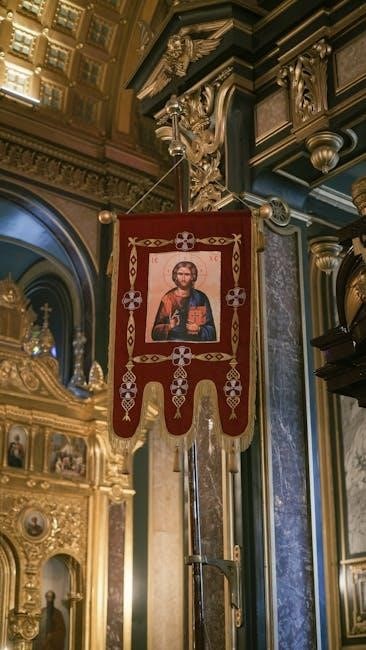
Iconostases, central to Orthodox churches, are visually striking features; numerous resources, including PDF documents, detail their history and theological significance.
What is an Iconostasis?
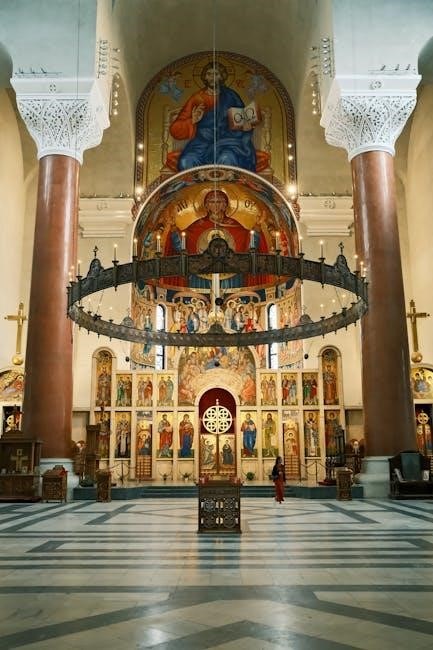
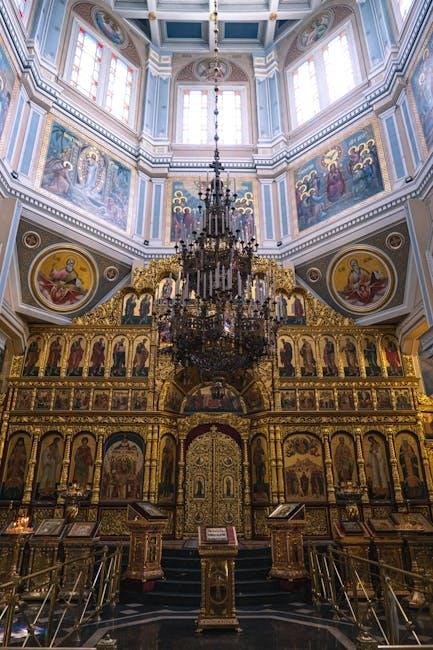
The iconostasis, a defining element of Orthodox Christian churches, functions as a visual divider separating the nave from the altar sanctuary. Often described as an “icon stand,” it’s more accurately a beautifully sculpted wall adorned with rows of icons. Numerous PDF resources detail its structure – typically featuring three doors, including the central Royal Doors.
These doors, and the icons themselves, aren’t merely decorative; they represent theological concepts and biblical narratives. Studying available PDF documentation reveals the iconostasis’s crucial role as a focal point during the Divine Liturgy, symbolizing heaven and earth, and facilitating a sacred connection.
Historical Development of the Iconostasis
The iconostasis evolved from low screens – templa – in early Byzantine churches, initially not fully separating worshippers from the altar. Detailed in accessible PDF studies, these precursors gradually developed into more substantial barriers. The influence of Hagia Sophia, documented in architectural PDFs, is notable.
Over time, these screens became elaborate structures, incorporating multiple icon rows. PDF analyses show a progression from simple barriers to complex artistic expressions, culminating in the richly decorated iconostases seen today. Examining historical PDFs reveals a continuous refinement of form and symbolism.
Significance in Orthodox Christian Worship
The iconostasis is paramount in Orthodox liturgy, serving as a visual focal point more significant than individual icons, as detailed in theological PDFs. It represents a symbolic boundary between the earthly and heavenly realms, a concept explored in numerous liturgical PDF guides.
PDF resources emphasize its role in connecting worshippers with the divine. The iconostasis isn’t merely a divider but facilitates a sacred encounter. Studying PDF analyses reveals its importance during the Divine Liturgy, framing the mystery of the Eucharist and veneration of icons.
Early Forms and Byzantine Origins
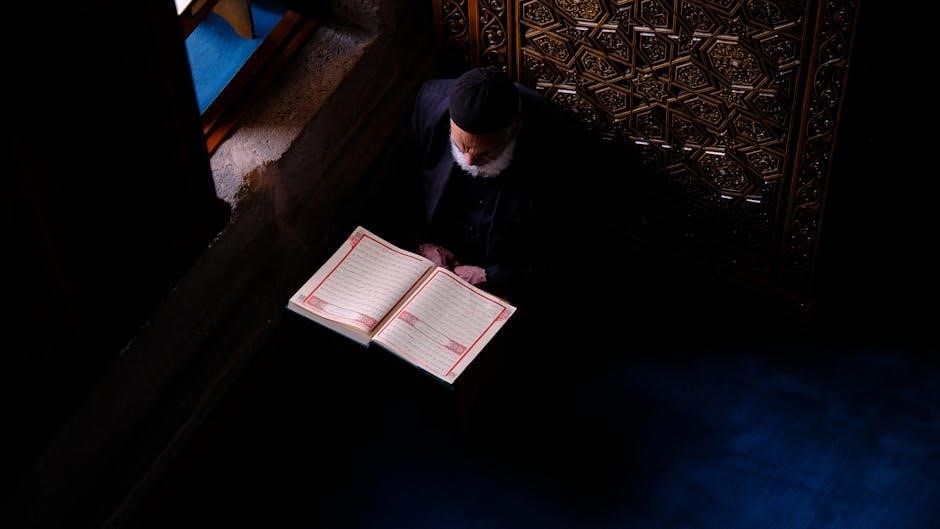
PDF studies reveal early Orthodox churches utilized low screens, precursors to the iconostasis, evolving from simple barriers into elaborate structures over time.
The Precursor: Low Screens in Early Byzantine Churches
PDF archives demonstrate that the iconostasis didn’t emerge fully formed. Instead, early Byzantine churches employed low screens to delineate the altar area. These weren’t intended to exclude worshippers, but rather to subtly separate the sacred space. Scholarly PDFs detail how these initial barriers, often constructed of wood or marble, served a functional purpose – defining the clergy’s domain.
These screens gradually increased in height and complexity, becoming more ornate over centuries. Digital libraries offer visual evidence of this progression, showcasing the evolution from simple partitions to the more elaborate structures that would eventually become the iconic iconostasis. These early forms laid the groundwork for the theological and artistic significance it holds today.
Evolution from Simple Barriers to Elaborate Structures
PDF resources illustrate the iconostasis’s development from modest beginnings. Initially, low screens simply marked the altar’s boundary. Over time, these barriers grew taller, incorporating carved wood and eventually, icons. Research papers available as PDFs reveal a gradual layering of icon rows, each imbued with theological meaning.
This evolution wasn’t merely architectural; it reflected deepening spiritual understanding. Online archives showcase how the iconostasis transformed into a complex symbolic representation of heaven and earth, a visual catechism for the faithful. The addition of increasingly elaborate ornamentation signified the growing importance of the structure;
Influence of Hagia Sophia on Iconostasis Design
PDF studies demonstrate that Hagia Sophia, though predating the fully developed iconostasis, profoundly influenced its aesthetic and structural principles. The cathedral’s monumental scale and harmonious integration of architecture, mosaics, and painting served as a model. Digital libraries offer visual evidence of how early iconostasis designs echoed Hagia Sophia’s spatial organization.
While Hagia Sophia lacked a traditional icon screen, its decorative program—particularly the use of monumental imagery—inspired the iconographic richness found in later iconostases. Scholarly articles, often available in PDF format, detail this artistic lineage and its impact on Byzantine church design.
Architectural Aspects of the Iconostasis
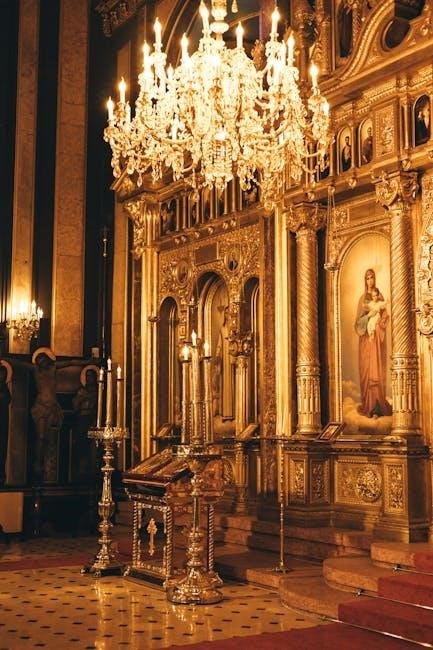
PDF resources reveal iconostases utilize materials like wood, stone, and metal, featuring pillars, cornices, and arches integrated with overall church architecture.
Materials Used in Iconostasis Construction
PDF documents detailing Orthodox iconostases consistently highlight wood as the primary material, often carved and gilded. However, construction isn’t limited to wood; stone, marble, and various metals—including bronze and silver—feature prominently, especially in embellishments. The choice often reflects regional availability and the church’s wealth.
Detailed analyses within these resources showcase how materials contribute to the iconostasis’s structural integrity and aesthetic impact. Gilding, a frequent technique, symbolizes divine light. The interplay of these materials creates a visually stunning barrier, separating the sanctuary from the nave, as described in scholarly PDFs.
Structural Components: Pillars, Cornices, and Arches
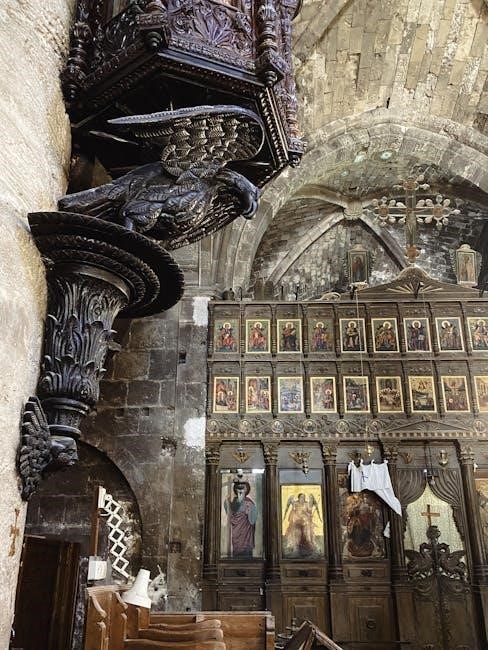
Orthodox iconostasis construction, as detailed in numerous PDF resources, relies on key structural elements. Pillars, often multiple tiers, define the divisions between icon rows. Cornices provide horizontal articulation and support the upper sections. Arches, frequently semi-circular or pointed, frame icons and create visual rhythm.
These PDF analyses emphasize how these components aren’t merely decorative; they contribute to the iconostasis’s stability and symbolic representation of heavenly hierarchies. The arrangement and ornamentation of pillars, cornices, and arches vary regionally, reflecting distinct artistic traditions.
Relationship to Church Architecture
PDF studies reveal the iconostasis isn’t isolated but deeply integrated with Orthodox church architecture. Its height and width are proportional to the nave, creating a harmonious visual balance. The iconostasis often aligns with architectural features like columns and arches, extending the church’s spatial rhythm.
These resources demonstrate how the iconostasis acts as a focal point, directing the worshiper’s gaze towards the altar. Its design complements the overall aesthetic, enhancing the sacred atmosphere. Variations exist, reflecting regional architectural styles, as documented in detailed PDF analyses.
Iconographic Program and Symbolism
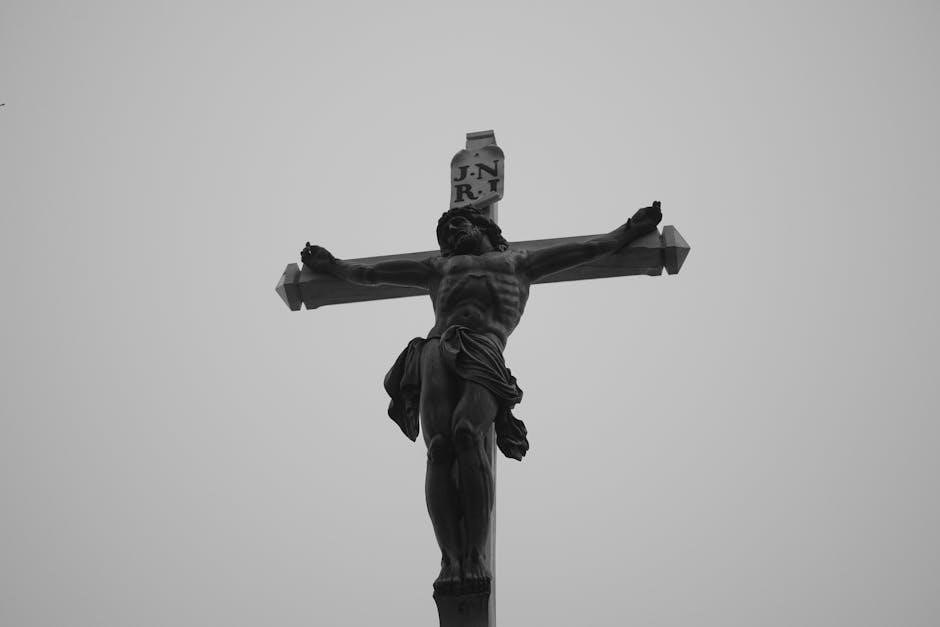
PDF resources illustrate the iconostasis’s layered symbolism, from the Deesis row to prophetic scenes; each icon contributes to a comprehensive theological narrative.
The Deesis Row: Central Figures and Their Meaning
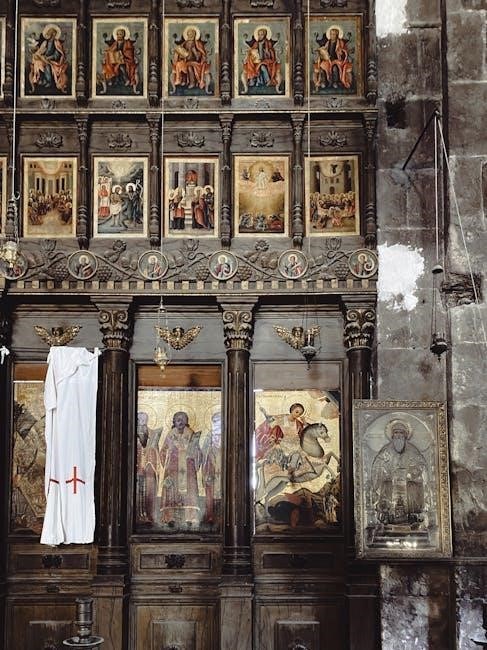
PDF analyses reveal the Deesis row as the iconostasis’s focal point, featuring Christ Pantocrator, the Theotokos, and John the Baptist—intercessors pleading for humanity. These central figures, often depicted in specific gestures, embody supplication and divine judgment.
Detailed PDF guides explain how the arrangement symbolizes Christ’s role as judge, with the Theotokos and John the Baptist representing righteous intercession. Surrounding figures, saints and prophets, join in prayer, creating a heavenly court. Understanding this row is crucial for interpreting the entire iconographic program, as detailed in accessible PDF resources.
Local (Church-Specific) Icons
PDF documentation highlights that “local” icons on the iconostasis honor the church’s patron saint, dedicatory feast, and significant local figures. These icons, varying from church to church, personalize the sacred space and connect worshippers to their specific spiritual community.
Detailed PDF studies demonstrate how these icons reflect the history and devotion of the local parish. They often depict miracles associated with the saint or events significant to the church’s founding. Accessing PDF archives allows researchers to compare iconographic programs across different regions and traditions.
Prophetic Icons and Their Placement
PDF resources consistently illustrate that prophetic icons, depicting Old Testament figures, occupy a designated tier on the iconostasis. These icons, such as those of Elijah, Isaiah, and Daniel, foreshadow the coming of Christ, as detailed in numerous scholarly PDF articles.
Their placement, typically above the Deesis row, signifies their role as precursors to the New Covenant. PDF guides often include diagrams illustrating the standard arrangement. Studying these PDFs reveals how iconographers carefully select prophets based on their prophetic messages relating to Christ’s incarnation.
Gospel Icons and Their Significance
PDF documents dedicated to Orthodox iconography emphasize the Gospel icons’ crucial position, typically flanking the Royal Doors. These icons depict the Evangelists – Matthew, Mark, Luke, and John – authors of the four Gospels, as detailed in accessible PDF guides.
Their placement signifies the proclamation of the Good News emanating from the altar. Scholarly PDFs explain that the icons are not merely decorative; they represent the foundational texts of Christian faith. Examining PDF resources reveals consistent artistic conventions in their depiction.
Festal Icons: Celebrating Major Church Feasts
Numerous PDF resources on Orthodox iconography detail the placement of festal icons on the iconostasis, commemorating significant events in the liturgical year. These icons, often arranged above the Deesis row, depict feasts like the Nativity, Resurrection, and Dormition, as explained in detailed PDF guides.
PDF analyses reveal a cyclical arrangement reflecting the Church’s calendar. These icons aren’t simply illustrations; they are windows into the theological meaning of each feast, accessible through scholarly PDF research. Their vibrant colors and detailed imagery enhance worship.
The Role of Color in Iconostasis Iconography
PDF studies of Orthodox iconostasis iconography emphasize color’s symbolic weight. Blues often represent heaven, reds signify divine energy and sacrifice, and golds embody the divine light, as detailed in accessible PDF guides. These colors aren’t arbitrary; they convey theological truths.
Scholarly PDF analyses demonstrate how color choices reinforce the narrative and spiritual meaning of each icon. Resources available in PDF format illustrate Mary and Jesus often wear specific colors, enhancing their roles within the iconographic program.
The Royal Doors and Their Importance
PDF resources reveal the Royal Doors symbolize Christ’s entry into the world and heaven, central to Orthodox worship and iconostasis design.
Symbolism of the Royal Doors
PDF documents exploring Orthodox iconography consistently highlight the profound symbolism embedded within the Royal Doors. These doors, typically adorned with depictions of the Annunciation – the Archangel Gabriel and the Virgin Mary – represent Christ as the gateway between humanity and the divine realm.
Their placement at the center of the iconostasis emphasizes Christ’s central role in salvation. Only the clergy may pass through them during specific liturgical moments, signifying access to the sacred space of the altar. The doors themselves are not merely decorative elements, but rather theological statements visualized, accessible through detailed study in available PDF resources.
Deacon Doors: Function and Placement
Numerous PDF resources detail the function and placement of Deacon Doors, flanking the Royal Doors within the iconostasis. Unlike the Royal Doors, reserved for sacred processions, Deacon Doors facilitate movement for clergy and deacons during liturgical services. They provide access for tasks like preparing the Eucharist and maintaining the altar.
Typically, these doors feature depictions of archdeacons or Old Testament figures. Their positioning emphasizes the hierarchical structure of the church and the distinct roles within the clergy. Studying detailed architectural plans within PDF guides clarifies their structural integration.
The Mountain of Transfiguration Representation
PDF documents dedicated to Orthodox iconography frequently showcase the prominent depiction of the Transfiguration of Christ above the Royal Doors on the iconostasis. This central placement symbolizes Christ’s divine glory and foreshadows the Kingdom of Heaven. The scene typically features Christ radiating light, alongside Moses and Elijah, representing the Law and the Prophets.
Detailed analyses within these PDF resources explain how this imagery connects the Old and New Testaments, highlighting Christ as the fulfillment of prophecy. The icon’s luminosity visually draws worshippers towards the heavenly realm;
Iconostasis in Different Orthodox Traditions
PDF studies reveal diverse iconostasis styles – Russian, Greek, Serbian – each reflecting unique artistic expressions and liturgical practices within Orthodox Christianity.
Russian Iconostasis: Characteristics and Styles
Russian iconostases, extensively documented in PDF resources, are renowned for their height and elaborate multi-tiered structure, often reaching five or more rows. These monumental screens frequently feature a profusion of icons, showcasing distinct stylistic developments over centuries.
PDF analyses highlight the influence of Byzantine traditions, evolving into uniquely Russian forms with elongated proportions and vibrant color palettes. Detailed PDF guides illustrate how Russian iconostases emphasize narrative cycles, depicting biblical stories and the lives of saints with remarkable detail. The Arkhangelsk iconostasis, detailed in scholarly PDF papers, exemplifies this rich tradition.
Greek Iconostasis: Distinctive Features
Greek iconostases, thoroughly explored in available PDF documentation, generally exhibit a more restrained elegance compared to their Russian counterparts. PDF resources emphasize a focus on clarity of design and symmetrical volumes, often featuring fewer tiers – typically three to four.
Scholarly PDF articles detail how Greek iconostasis designs prioritize the visual connection between the sanctuary and the nave. The Church of the Transfiguration, as described in PDF studies, showcases this clarity. PDF guides highlight the harmonious integration of architecture, painting, and the iconostasis itself.
Serbian Iconostasis: Unique Artistic Expressions
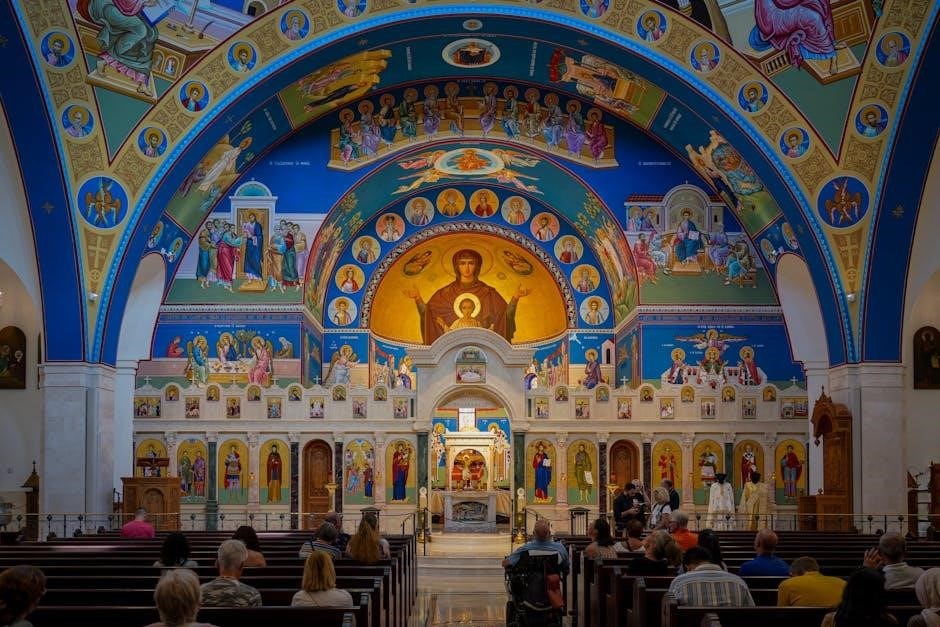
Serbian iconostases, richly documented in accessible PDF formats, are renowned for their distinctive artistic expressions and vibrant color palettes. PDF resources showcase a unique blend of Byzantine traditions with local artistic influences, resulting in highly ornate and detailed structures.
Detailed PDF analyses reveal a preference for complex compositions and a narrative approach to iconography. The Arkhangelsk iconostasis, extensively studied in PDF reports, exemplifies this with its 76 icons spanning the 16th and 17th centuries. These PDF sources highlight the Serbian mastery of fresco and mosaic integration.
Iconostasis and Liturgical Practice
PDF resources illustrate the iconostasis’s role as both a boundary and connection during the Divine Liturgy, central to Orthodox worship.
The Iconostasis as a Boundary and Connection
Orthodox PDF studies reveal the iconostasis isn’t merely a physical barrier separating the nave from the altar’s sacred space. It visually signifies the division between heaven and earth, yet simultaneously connects worshippers to the divine realm.
Through the Royal Doors, clergy emerge, enacting the mysteries of faith, bridging this divide. The iconographic program itself—depicting Christ, the Theotokos, and saints—facilitates communion with the heavenly hosts.
Digital archives demonstrate how this structure embodies a paradoxical function: protection of the holy place and invitation to participate in its grace.
Role During the Divine Liturgy
Orthodox liturgical PDF resources highlight the iconostasis’s pivotal role during the Divine Liturgy. It serves as the backdrop for the unfolding drama of salvation, with the Royal Doors central to processions and the priest’s movements.
The opening and closing of these doors symbolize heaven’s gates, mirroring key moments in the Eucharistic celebration.
Icons displayed upon it aren’t static images, but active participants, witnessing and interceding during the sacred mysteries. Scholarly papers detail how the iconostasis visually guides the faithful through the liturgy’s progression.
Veneration of Icons on the Iconostasis
PDF guides on Orthodox practice emphasize the veneration – not worship – of icons adorning the iconostasis. Believers offer reverence through kissing, lighting candles, and prostrations, acknowledging the saints and Christ depicted.
These acts aren’t directed at the wood and paint, but through them to the heavenly prototypes.
Digital archives showcase how iconostasis icons become focal points for personal prayer and communal devotion, integral to the liturgical experience, as detailed in theological studies.
Preservation and Restoration of Iconostases
PDF reports detail challenges in preserving ancient iconostases, outlining restoration techniques; the Arkhangelsk iconostasis serves as a detailed case study example.
Challenges in Preserving Ancient Iconostases
Preserving ancient iconostases presents significant hurdles, detailed in numerous PDF documents and scholarly articles. Environmental factors—humidity, temperature fluctuations—cause wood warping and paint degradation. Prior, often inadequate, restoration attempts introduce further complications.
The sheer scale of many iconostases, like that of Arkhangelsk, complicates conservation. Identifying original materials and techniques is crucial, yet challenging. Securing funding for extensive, specialized restoration work remains a persistent obstacle. Damage from historical events and neglect also contribute to the complexity of preservation efforts.
Techniques Used in Restoration
Restoration of iconostases, documented in specialized PDF reports, employs meticulous techniques. Consolidation of wood structures is paramount, addressing warping and instability. Paint layers require careful cleaning, often using gentle solvents, to remove grime without damaging the original pigments.
Lost paint is painstakingly reintegrated, adhering to principles of reversibility. Structural repairs utilize traditional joinery methods. Detailed documentation, including photography, is essential throughout the process. The Arkhangelsk iconostasis restoration exemplifies these methods, showcasing a commitment to preserving authenticity.
The Arkhangelsk Iconostasis: A Case Study
The Arkhangelsk iconostasis, detailed in scholarly PDF analyses, serves as a prime restoration example. Its five tiers boast 76 icons dating from the 16th and 17th centuries, covering 500 square meters of frescoes. The project involved extensive structural stabilization and paint layer conservation.
Researchers documented the iconostasis’s semiotic and structural elements. This case study highlights challenges in preserving such large-scale, ancient artworks, demonstrating successful application of traditional restoration techniques while respecting its historical integrity.
Iconostasis in PDF Format: Accessing Resources
PDF documents offer in-depth studies of Orthodox iconostases, available through online archives, digital libraries, and scholarly research papers for detailed exploration.
Online Archives and Digital Libraries
Numerous online platforms provide access to valuable PDF resources concerning Orthodox iconostases. Digital libraries, such as those maintained by theological seminaries and universities, frequently host digitized scholarly articles and dissertations. These resources often include detailed structural analyses, like the study of the Arkhangelsk iconostasis, and semiotic interpretations of iconographic programs;
Researchers can also explore online archives dedicated to Orthodox art and architecture, which may contain scanned copies of historical monographs and catalogues documenting iconostasis designs across different traditions – Russian, Greek, and Serbian – offering a comprehensive view of their evolution.
Scholarly Articles and Research Papers
Accessing in-depth knowledge requires exploring scholarly articles, often available as PDF downloads. Databases like JSTOR and Academia.edu host research analyzing iconostasis construction, materials, and symbolism. Papers detail the evolution from early Byzantine low screens to elaborate structures, influenced by landmarks like Hagia Sophia.
Studies dissect the iconographic programs – the Deesis row, local icons, and festal depictions – and their theological underpinnings. Research also focuses on preservation challenges and restoration techniques, exemplified by case studies like the Arkhangelsk iconostasis, providing crucial insights.
Museum Collections with Online Iconostasis Documentation
Several museums offer digital access to iconostasis-related materials, often in PDF format. Institutions like the Metropolitan Museum of Art and the Benaki Museum showcase high-resolution images and detailed descriptions of iconostasis components. Online collections frequently include provenance information, stylistic analyses, and conservation reports.
Researchers can find digitized archival documents, including sketches and historical photographs, aiding in understanding construction techniques and iconographic traditions. Many museums provide downloadable catalogues and scholarly publications related to their Orthodox art holdings.
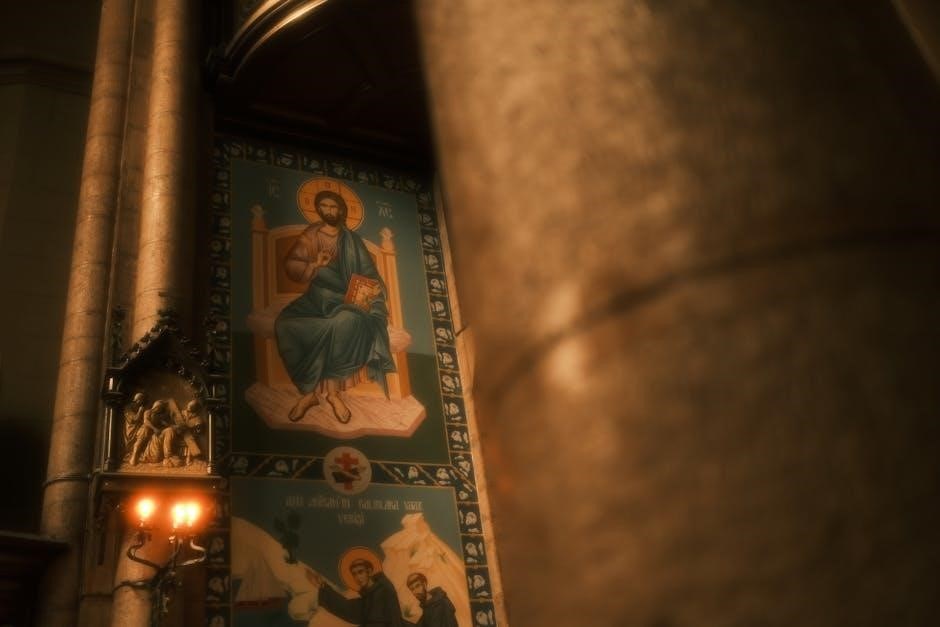
Contemporary Iconostasis Design
PDF resources showcase modern interpretations of traditional forms, utilizing new materials and techniques while maintaining the iconostasis’s spiritual and architectural essence.
Modern Interpretations of Traditional Forms
Contemporary iconostasis design frequently blends reverence for historical precedents with innovative artistic expression. PDF documents detailing recent projects reveal a trend toward simplified structures, sometimes employing abstract or geometric motifs alongside traditional iconography. While maintaining the core function of separating the sanctuary, modern designs often prioritize greater transparency and light penetration.
Artists are experimenting with diverse materials – beyond wood – including metal, glass, and stone, often incorporating digital fabrication techniques. These reinterpretations aim to connect with contemporary sensibilities while upholding the iconostasis’s profound theological symbolism, as explored in scholarly PDF analyses of liturgical art.
Materials and Techniques in Contemporary Iconostasis Creation
Modern iconostasis construction diverges from solely utilizing wood, embracing materials like stainless steel, polished stone, and even blown glass, documented in detailed project PDFs. Traditional carving and gilding techniques persist, but are often augmented by CNC milling and laser cutting for precision. Icon painters continue employing egg tempera, yet acrylics are increasingly common for durability.
Digital design software aids in complex compositions, and PDF guides showcase innovative approaches to icon mounting and illumination; The integration of LED lighting is prevalent, enhancing icon visibility and creating atmospheric effects, all while respecting Orthodox aesthetic principles.
The Future of Iconostasis Art
The future of iconostasis art likely involves a synthesis of tradition and innovation, extensively documented in emerging digital PDF archives. Expect increased use of sustainable materials and eco-friendly pigments, alongside explorations of new iconographic styles that resonate with contemporary sensibilities.
Virtual reality PDF reconstructions of historical iconostases may become common educational tools. Collaborative design, facilitated by online platforms, could foster a global community of iconographers. The core theological message, however, will remain paramount, ensuring the iconostasis continues to inspire reverence.
Iconostasis and its Cultural Impact
Iconostases profoundly influence Orthodox art and theology, with detailed analyses available in scholarly PDF resources, reflecting a unique cultural identity.
Influence on Orthodox Art and Architecture
Iconostases dramatically shaped Orthodox artistic expression, integrating architecture and sculpture on a grand scale, as detailed in numerous PDF studies. They spurred monumental painting, mosaic work, and iconographic styles, harmonizing with church interiors.
The Arkhangelsk iconostasis, documented in accessible PDF reports, exemplifies this fusion, showcasing 16th-17th century icons within a defined structural framework. This integration isn’t merely decorative; it’s a theological statement manifested in physical form, influencing subsequent church designs and artistic endeavors.
Iconostasis as a Reflection of Theological Beliefs
The iconostasis isn’t simply an artistic barrier; it embodies core Orthodox theology, visually representing the divide and connection between heaven and earth. Detailed analyses in accessible PDF formats reveal its semiotic layers, showcasing the hierarchical order of saints and biblical scenes.
Its structure and iconography, as explored in scholarly PDF papers, reflect beliefs about salvation, divine grace, and the intercession of the saints. The placement of icons isn’t arbitrary, but a deliberate theological statement, readily available for study through digital resources.
The Iconostasis as a Symbol of Orthodox Identity
The iconostasis profoundly signifies Orthodox Christian identity, visually distinguishing their worship space and theological understanding. Numerous PDF resources document how this feature evolved, becoming a hallmark of the faith across diverse cultural contexts.
Studying historical iconostases through digitized archives (available in PDF form) reveals regional stylistic variations – Russian, Greek, Serbian – yet a shared core symbolism. It’s a tangible link to centuries of tradition, reinforcing a collective religious heritage, readily accessible via online documentation.