Article Plan: Filetype:PDF Gym Rubber Mat
This document, a PDF spec sheet from American Floor Mats (2011), details composition, thickness, surfaces, color, and key physical properties of gym rubber mats.
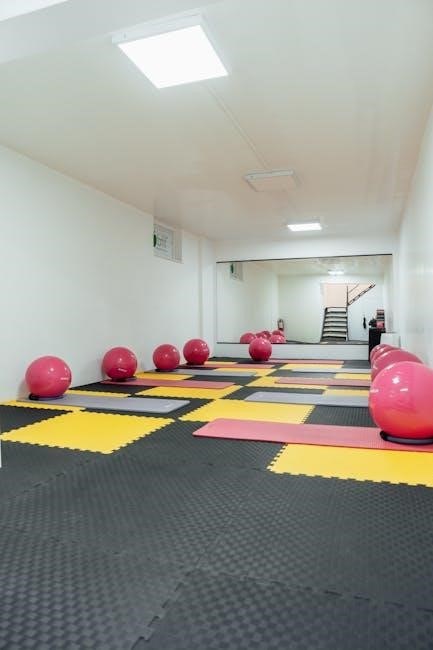
Gym rubber mats are a versatile and durable flooring solution, increasingly popular in fitness facilities and home gyms alike. These mats provide essential cushioning, impact absorption, and slip resistance, enhancing safety during various exercises. Commonly constructed from recycled rubber, they offer an environmentally conscious choice for flooring needs.
As detailed in the American Floor Mats specification sheet (dated May 11, 2011), these mats are engineered for performance and longevity. They are available in a range of thicknesses and surface textures to accommodate diverse workout routines and preferences. Understanding their composition, properties, and applications is crucial for selecting the optimal mat for any fitness environment.
What are Gym Rubber Mats Made Of?
Gym rubber mats, as outlined in the American Floor Mats document, primarily consist of recycled rubber, accounting for 97% of the material composition. This sustainable approach repurposes rubber waste, contributing to environmental responsibility. The remaining 3% comprises urethane binders, crucial for holding the rubber particles together and providing structural integrity.
This combination yields a resilient and durable surface capable of withstanding heavy use. The specific formulation impacts the mat’s physical properties, such as tensile strength and hardness. The quality of both the recycled rubber and the urethane binder significantly influences the overall performance and lifespan of the gym mat.
2.1 Recycled Rubber Composition
The core component of these gym mats is recycled rubber, constituting a substantial 97% of the overall material, as detailed in the specification sheet. This highlights a commitment to utilizing post-consumer or industrial rubber waste, diverting it from landfills and promoting sustainability. The source of this recycled rubber can vary, potentially including tires, manufacturing scraps, and other rubber products.
The use of recycled rubber doesn’t compromise performance; it provides excellent shock absorption and durability. The specific grade and processing of the recycled rubber influence the mat’s texture and resilience, contributing to its suitability for gym environments.
2.2 Urethane Binders Role
Urethane binders play a crucial, though smaller, role in the composition of these gym rubber mats, accounting for 3% of the total material, according to the provided spec sheet. These binders are essential for holding the recycled rubber granules together, creating a cohesive and durable mat structure. Urethane offers superior flexibility and resistance to degradation compared to other binding agents.
The quality and type of urethane binder directly impact the mat’s overall strength, resilience, and resistance to tearing. It also influences the mat’s ability to withstand repeated impact and maintain its shape over time, ensuring long-term performance.
Common Thicknesses and Weights
Gym rubber mats, as detailed in the American Floor Mats specification sheet, are commonly available in four nominal thicknesses, each corresponding to a specific weight per square foot. These options cater to diverse fitness needs and impact absorption requirements. The available thicknesses are 3/4″ (4.0 lbs./sq. ft.), 1/2″ (3.0 lbs./sq. ft.), 3/8″ (2.0 to 2.2 lbs./sq. ft;), and 1/4″ (1.6 lbs./sq. ft.).
Selecting the appropriate thickness and weight is crucial for ensuring adequate cushioning, protecting both the floor and equipment, and providing a safe workout surface.
3.1 3/4″ (4.0 lbs./sq. ft.) Mats
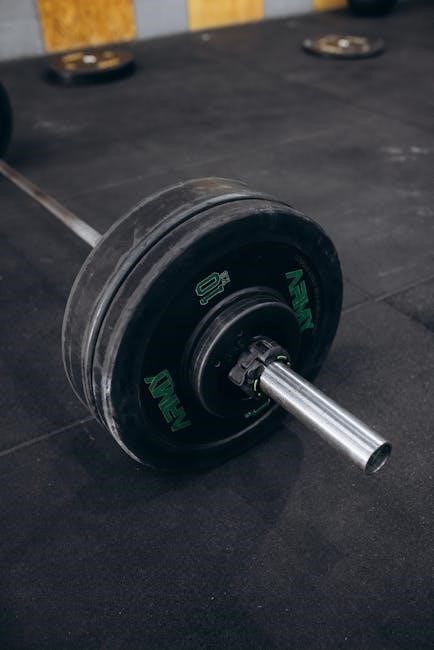
The 3/4″ thick gym rubber mats, weighing 4.0 pounds per square foot, represent a heavier-duty option ideal for demanding fitness environments. According to the American Floor Mats spec sheet, this thickness provides substantial cushioning and impact absorption, making them suitable for rigorous activities like weightlifting and high-impact training.
Their robust construction offers excellent floor protection and noise reduction. These mats are a preferred choice for commercial gyms and dedicated home workout spaces requiring maximum durability and safety.
3.2 1/2″ (3.0 lbs./sq. ft.) Mats
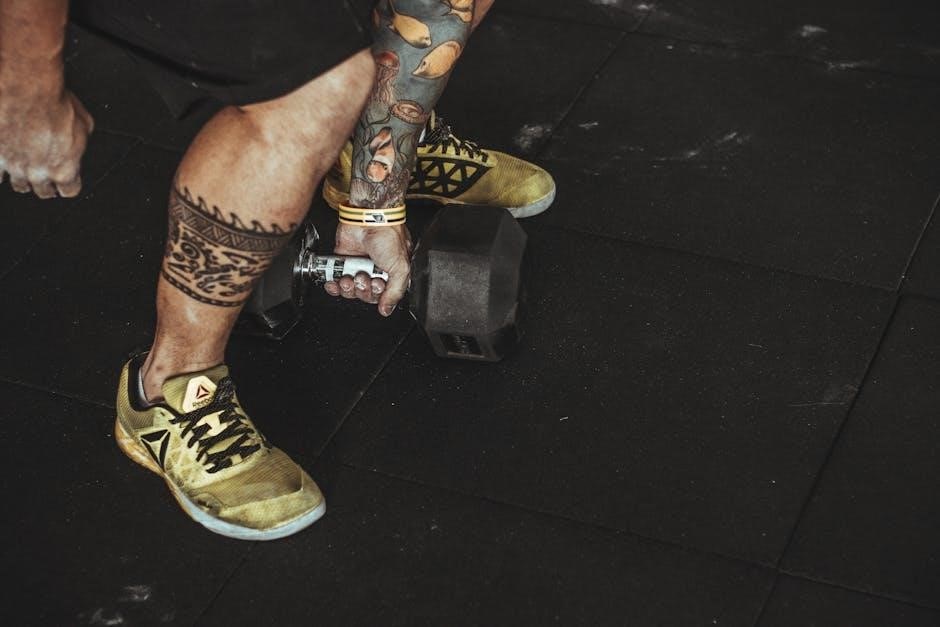
The 1/2″ gym rubber mats, weighing 3.0 pounds per square foot, strike a balance between cushioning and affordability, as detailed in the American Floor Mats specification document. This thickness is versatile enough for a wide range of exercises, including general fitness, yoga, and light weight training.
They offer good impact absorption and floor protection, making them a popular choice for home gyms and multipurpose fitness areas. These mats provide a comfortable workout surface without adding excessive bulk or weight.
3.3 3/8″ (2.0 to 2.2 lbs./sq. ft.) Mats
According to the American Floor Mats spec sheet, the 3/8″ rubber mats weigh between 2.0 and 2.2 pounds per square foot, representing a lighter-weight option suitable for less intense activities. These mats are often chosen for areas where portability is important, or where a lower profile is desired.
They are well-suited for stretching, bodyweight exercises, and as a protective layer under lighter equipment. While offering less cushioning than thicker options, they still provide a significant improvement over bare flooring.
3.4 1/4″ (1.6 lbs./sq. ft.) Mats
The spec sheet from American Floor Mats indicates that the 1/4″ thick rubber mats are the lightest option, weighing 1.6 pounds per square foot. These are ideal for applications prioritizing minimal bulk and maximum portability, such as temporary workout spaces or use with lighter fitness routines.
While providing a protective barrier, these mats offer the least amount of cushioning. They are best suited for activities like yoga, Pilates, or as a general floor covering in low-impact zones.
Surface Texture Options
According to the American Floor Mats spec sheet, gym rubber mats are available with two distinct surface texture options to cater to diverse needs. One side features a flat surface, while the opposite side incorporates a wire mesh texture designed to provide enhanced anti-skid properties.
Alternatively, mats can be ordered with both sides exhibiting a non-porous surface. This configuration is beneficial in environments where hygiene and ease of cleaning are paramount, preventing liquid absorption and simplifying maintenance routines.
4.1 Flat One Side, Wire Mesh Texture Opposite
The spec sheet details a common gym rubber mat configuration: one side is completely flat, providing a smooth surface for general exercise and equipment placement. The opposing side features a distinct wire mesh texture, intentionally engineered to maximize traction and minimize slippage.
This anti-skid surface is particularly valuable during high-impact activities or when using equipment that requires a stable base. The combination offers versatility, allowing users to choose the appropriate surface based on their workout needs and safety considerations, enhancing overall gym functionality.
4.2 Both Sides Non-Porous
The American Floor Mats specification sheet also outlines mats constructed with non-porous surfaces on both sides, offering distinct advantages for specific applications. This construction prevents the absorption of liquids, such as sweat or spilled drinks, making these mats exceptionally hygienic and easy to clean.
The non-porous nature also contributes to the mat’s durability, resisting the growth of mold and mildew. This makes them ideal for environments where cleanliness is paramount, or where exposure to moisture is frequent, ensuring a safe and long-lasting flooring solution.
Color Variations
According to the American Floor Mats spec sheet, gym rubber mats are available in two primary color options, catering to diverse aesthetic preferences and functional needs. The standard offering is a solid black rubber mat, providing a classic and versatile look suitable for most gym environments.
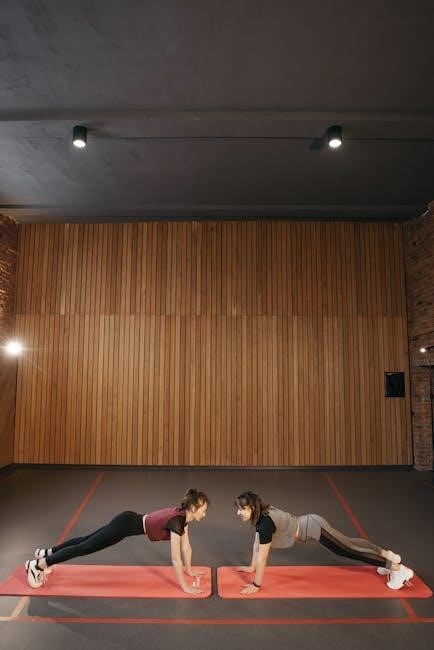
Alternatively, mats are also produced in black with flecks of colored EPDM rubber. This allows for visual differentiation, zone marking, or simply adding a splash of color to the workout space. The EPDM flecks enhance the visual appeal while maintaining the mat’s durability and performance characteristics.
5.1 Solid Black Rubber Mats
The spec sheet from American Floor Mats highlights solid black rubber mats as a foundational color option for gym flooring. This classic choice offers a neutral and professional aesthetic, seamlessly integrating into various gym designs and color schemes. Black mats effectively conceal dirt and scuff marks, maintaining a clean appearance with minimal upkeep.
Their understated look makes them versatile for diverse applications, from weightlifting areas to cardio zones. The solid black color doesn’t distract from workout routines and provides a consistent, uniform surface. This option is a practical and visually appealing solution for any fitness facility.
5.2 Black with Colored EPDM Flecks
According to the American Floor Mats spec sheet, gym rubber mats are also available in black integrated with colored EPDM rubber flecks. This variation introduces visual interest and allows for customization, potentially incorporating brand colors or defining specific workout zones within a gym. EPDM rubber is known for its durability, UV resistance, and vibrant color retention.
The flecked appearance can also help to mask minor wear and tear over time. These mats offer a balance between aesthetic appeal and practical functionality, providing a durable and visually dynamic flooring solution for fitness environments.
Key Physical Properties
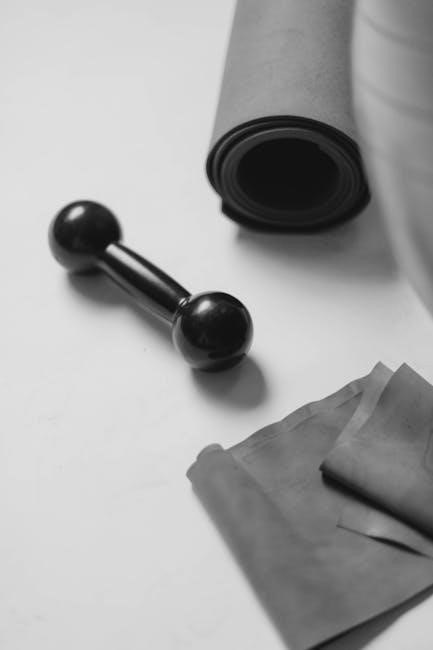
The American Floor Mats specification sheet highlights crucial physical properties defining the performance of these gym rubber mats. Notably, they exhibit a tensile strength of 350 psi, indicating resistance to tearing and deformation under stress. Hardness, measured on the Shore A scale, falls between 60-64, balancing cushioning with firm support for exercise;
These properties ensure the mats can withstand heavy use and impact. They are critical for safety and longevity, providing a stable and reliable surface for various gym activities. Understanding these specifications is vital when selecting mats for specific fitness needs.
6.1 Tensile Strength (350 psi)
Tensile strength, measured at 350 pounds per square inch (psi) for these gym rubber mats, is a critical indicator of their durability and resistance to rupture. This value signifies the amount of tensile stress the material can endure before breaking or permanently deforming under pulling forces.
A higher tensile strength suggests the mats can withstand significant weight and repeated stress from exercise equipment and foot traffic. This property is particularly important in high-impact areas, ensuring the mats maintain their integrity and provide a safe workout surface over time.
6.2 Hardness (60-64 Shore A)
The hardness of these gym rubber mats falls within the 60-64 Shore A range, a common measurement for rubber materials. The Shore A scale assesses resistance to indentation; a lower number indicates a softer material, while a higher number signifies greater firmness.
This specific hardness level provides a balance between cushioning for impact absorption and sufficient firmness to support weightlifting and other exercises. It ensures comfort underfoot while maintaining stability and preventing excessive sinking or deformation. This range is ideal for diverse gym activities.
Safety Standards and Flammability
These gym rubber mats prioritize safety, demonstrated by their compliance with stringent flammability standards. According to the provided specification sheet from American Floor Mats, the mats successfully pass Federal Flammability Standard Doc FF 1-70, as established by the CPSC (Consumer Product Safety Commission).
This certification indicates the material’s resistance to ignition and its ability to self-extinguish, minimizing fire hazards within a gym or workout space. Meeting this standard assures users and facility owners of a safer flooring option, crucial for environments with potential ignition sources.
7.1 Federal Flammability Standard Doc FF 1-70 CPSC Compliance
The American Floor Mats specification sheet explicitly states that their gym rubber mats meet the requirements of Federal Flammability Standard Doc FF 1-70. This standard, overseen by the CPSC, is a critical benchmark for assessing the fire-resistant properties of materials used in public and commercial spaces.
Passing this test signifies that the rubber mats exhibit a controlled flame spread and a low smoke development rate, enhancing safety in fitness environments. Compliance provides assurance to gym owners and users regarding the product’s ability to mitigate fire risks, adhering to essential safety regulations.
Dimensional Stability
According to the American Floor Mats document, these gym rubber mats demonstrate excellent dimensional stability under varying temperature conditions. Testing reveals a minimal change of 0.242% after exposure to 60°C (140°F) for two hours.
Furthermore, the mats exhibit even greater stability at room temperature, showing only a 0.092% alteration in dimensions after a 48-hour period at 20°C (68°F). This indicates a high resistance to warping, shrinking, or expanding, ensuring the mats maintain their intended shape and size over time, contributing to long-term performance.
8.1 Stability at 60°C (Two Hours) ⏤ 0.242%
The spec sheet details that when subjected to a temperature of 60°C (140°F) for a duration of two hours, the gym rubber mats exhibited a dimensional change of only 0.242%. This measurement, sourced directly from American Floor Mats’ documentation, signifies the material’s ability to retain its structural integrity even under elevated heat.
Such stability is crucial for applications in environments where temperature fluctuations may occur, assuring consistent performance and minimizing the risk of deformation or compromise to the mat’s overall functionality.
8.2 Stability at 20°C (48 Hours) ⏤ 0.092%
According to the American Floor Mats specification sheet, the gym rubber mats demonstrate exceptional dimensional stability even under standard room temperature conditions. Specifically, when exposed to 20°C (68°F) for an extended period of 48 hours, the mats exhibited a minimal dimensional change of just 0.092%.
This low percentage indicates a high degree of resistance to warping, shrinking, or expanding, ensuring the mats maintain their intended shape and size over prolonged use in typical indoor environments.
Applications of Gym Rubber Mats
Gym rubber mats, as detailed in the American Floor Mats specification sheet, are incredibly versatile flooring solutions. They are ideally suited for a wide range of fitness environments, including home gyms, commercial weightlifting areas, and professional training facilities.
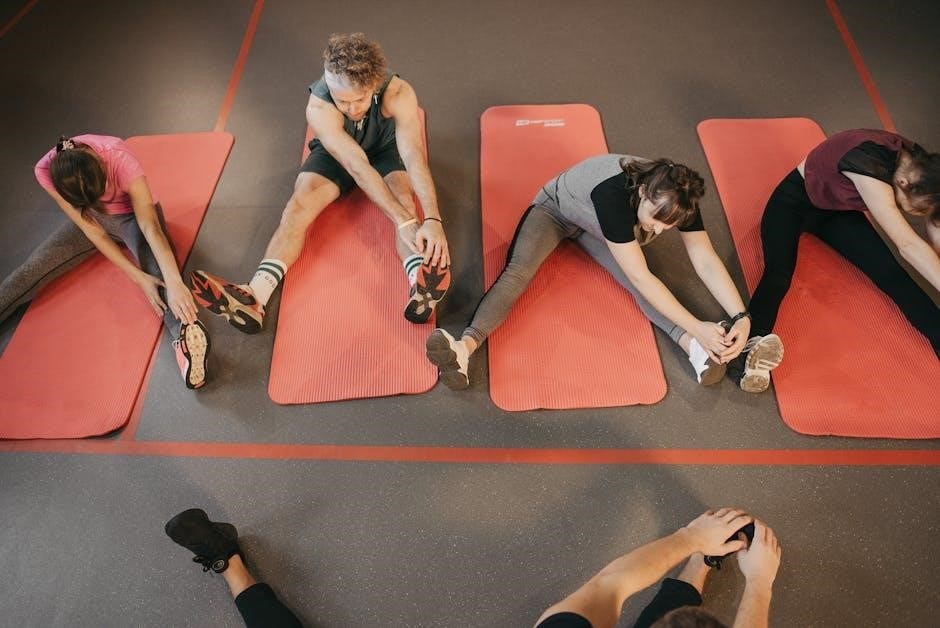
These mats provide a protective surface for free weight exercises, cardio equipment, and general workout routines. Beyond gyms, they find application in workshops, play areas, and even under machinery to dampen noise and reduce vibration, showcasing their broad utility.
Benefits of Using Rubber Gym Mats
According to the American Floor Mats spec sheet, rubber gym mats offer substantial advantages. Their composition – 97% recycled rubber and 3% urethane binders – delivers excellent durability and shock absorption, protecting both floors and joints during exercise.
The textured surfaces (flat or wire mesh) enhance traction, improving safety. Furthermore, the mats reduce noise, minimize vibration, and provide a comfortable workout surface. They are a cost-effective and long-lasting flooring option, contributing to a safer and more effective fitness environment.
Where to Purchase Gym Rubber Mats
Based on the provided American Floor Mats document, a primary source for these mats is directly through American Floor Mats themselves. Their contact information, as listed on the spec sheet, includes the address: 152 Rollins Avenue #102, Rockville, MD 20852.
You can reach them by phone at 240-780-3309 (fax). Their website, http://www.americanfloormats.com, likely offers online purchasing options and further product details. While the document doesn’t list exclusive retailers, searching online for “gym rubber mats” will reveal additional vendors.
Cost Considerations
The provided spec sheet from American Floor Mats does not detail specific pricing information for their gym rubber mats. Cost will vary significantly based on several factors, including the chosen thickness (ranging from 1/4″ to 3/4″), the square footage needed, and whether you opt for solid black or mats with colored EPDM flecks.
Generally, thicker mats and those with colored flecks command a higher price. Shipping costs will also contribute to the overall expense. Obtaining a quote directly from American Floor Mats or comparing prices from other vendors is recommended for accurate budgeting.
Maintenance and Cleaning
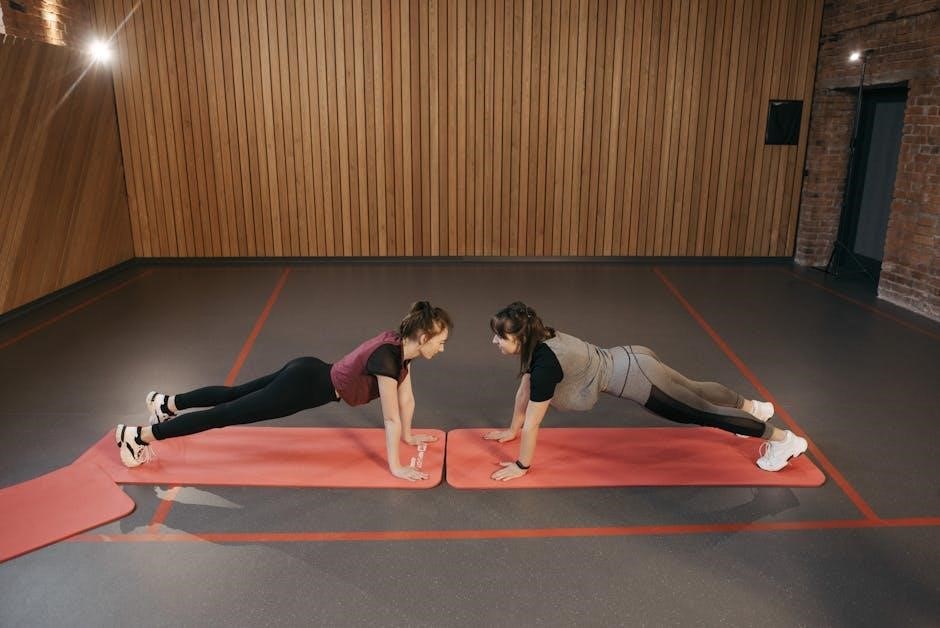
The American Floor Mats spec sheet doesn’t explicitly detail maintenance procedures, but rubber gym mats are generally low-maintenance. Regular sweeping or vacuuming will remove loose dirt and debris, preventing buildup. For more thorough cleaning, a damp mop with a mild detergent solution is sufficient; avoid harsh chemicals or abrasive cleaners that could damage the rubber.
Occasional deep cleaning may be necessary, especially in high-traffic areas. Ensure the mats are fully dry before resuming use to prevent slipping hazards. Proper maintenance extends the lifespan and maintains the appearance of the mats.
Installation Guidelines
The provided spec sheet from American Floor Mats doesn’t offer specific installation instructions. However, gym rubber mats are typically laid directly onto a level, clean floor surface. Interlocking mats may require alignment and connection according to the manufacturer’s directions. For larger areas, consider staggering seams for increased stability and a more uniform appearance.
Full adhesion isn’t usually necessary, but adhesive can be used for a permanent installation. Ensure adequate ventilation during adhesive application. Proper installation ensures safety and maximizes the mat’s performance.
Comparing Rubber Mats to Other Flooring Options
Compared to concrete, rubber mats offer cushioning and impact absorption, reducing strain during workouts; Unlike vinyl or wood, rubber is highly durable and resistant to damage from weights and equipment. While carpet provides some cushioning, it doesn’t offer the same level of protection or ease of cleaning as rubber.
Rubber’s textured surface provides superior traction compared to smoother flooring types. It’s a cost-effective solution, balancing performance, longevity, and maintenance requirements, making it ideal for gym environments.
Environmental Impact of Recycled Rubber
Gym rubber mats significantly contribute to sustainability by utilizing 97% recycled rubber content, diverting tires and other rubber waste from landfills. This reduces the demand for virgin rubber production, conserving natural resources and minimizing associated environmental impacts.
The manufacturing process, while requiring urethane binders (3%), still represents a lower environmental footprint compared to producing alternative flooring materials. Choosing recycled rubber supports a circular economy and promotes responsible waste management practices, offering an eco-friendly flooring solution.
Frequently Asked Questions (FAQs)
Q: What are these mats made of? A: Primarily 97% recycled rubber and 3% urethane binders, offering durability and eco-friendliness.
Q: What thickness should I choose? A: Options range from ¼” to ¾”, depending on impact needs and activity levels. Thicker mats provide greater cushioning.
Q: Are these mats safe? A: Yes, they pass Federal Flammability Standard Doc FF 1-70 CPSC, ensuring fire safety. They also feature anti-skid surfaces.
Q: What about dimensional stability? A: Excellent stability is confirmed with minimal shrinkage at both 60°C and 20°C, ensuring long-lasting performance.
Choosing the Right Thickness for Your Needs
Selecting the appropriate thickness is crucial for optimal performance and safety. ¼” mats (1.6 lbs/sq ft) suit lighter activities like yoga or stretching. ⅜” (2.0-2.2 lbs/sq ft) are versatile for general fitness.
For heavier weightlifting and high-impact training, ½” (3.0 lbs/sq ft) provides substantial cushioning. The ¾” option (4.0 lbs/sq ft) offers maximum protection for dropping weights and intense workouts. Consider the floor’s subfloor; thicker mats compensate for unevenness.

Prioritize safety and equipment protection when making your decision.
Understanding Shore A Hardness Scale
The Shore A hardness scale measures a material’s resistance to indentation. Gym rubber mats typically range from 60-64 Shore A, indicating a balance between firmness and cushioning. Lower numbers signify softer materials, ideal for comfort during floor exercises.
Higher numbers denote greater rigidity, beneficial for supporting heavy weights. This scale is vital for assessing a mat’s ability to withstand repeated use and impact. A rating within the 60-64 range suggests durability and appropriate shock absorption.

Consider the intended use when evaluating Shore A hardness.
The Role of EPDM Rubber in Mat Color
EPDM (ethylene propylene diene monomer) rubber is crucial for achieving color variations in gym mats. While base mats are typically solid black, incorporating colored EPDM flecks allows for aesthetic customization. These flecks are blended with the recycled rubber during manufacturing, creating a speckled appearance.
EPDM is chosen for its excellent color stability and resistance to fading. It doesn’t significantly affect the mat’s physical properties like tensile strength or hardness. The amount of EPDM used determines the intensity of the color.
Black mats with EPDM flecks offer both functionality and visual appeal.
Long-Term Durability and Wear Resistance
Gym rubber mats, composed of 97% recycled rubber and 3% urethane binders, demonstrate robust long-term durability. The recycled rubber provides a resilient base, capable of withstanding heavy impact and consistent use. Urethane binders enhance cohesion, minimizing crumbling and material loss over time.
Tensile strength of 350 psi and a hardness of 60-64 Shore A contribute to wear resistance. These properties ensure the mats maintain their structural integrity even under stress. Proper maintenance, like regular cleaning, further extends their lifespan.
The mats are designed for sustained performance in demanding environments.
Warranty Information
Unfortunately, the provided PDF spec sheet from American Floor Mats (dated 2011) does not explicitly detail warranty information for their gym rubber mats. This omission is a notable gap in the documentation, leaving potential buyers without immediate clarity regarding product guarantees.
Typically, rubber mat warranties cover defects in materials and workmanship for a specified period. Coverage may vary based on mat thickness, intended use (commercial vs. home), and proper installation.
Directly contacting American Floor Mats is recommended to obtain current warranty details.
Gym rubber mats, as detailed in the American Floor Mats spec sheet (2011), offer a durable and versatile flooring solution. Constructed from 97% recycled rubber and 3% urethane binders, they provide impact absorption and noise reduction.
Available in various thicknesses – 3/4”, 1/2”, 3/8”, and 1/4” – and surface textures, these mats cater to diverse fitness needs. Their tensile strength (350 psi) and hardness (60-64 Shore A) contribute to longevity.
While the spec sheet lacks warranty specifics, the inherent qualities suggest a worthwhile investment for gyms and home fitness spaces.