
Understanding “My Mate Has Two Wolves”
The narrative, spanning 213 pages and 8MB, centers on a boy’s silent observation of a wolf reflecting on loss,
a poignant exploration detailed within a 2018 publication by K.V. Galaktionov.
A 120-page, 8MB document from November 8, 2015, hints at non-linear relationships,
linking genetic factors and phenotypic traits, subtly woven into the story’s fabric.
The story, as evidenced by a March 27, 2020, reference, involves a dialogue –
“Youyou know hes my mate?” – revealing a complex connection and underlying sadness.
Overview of the Work
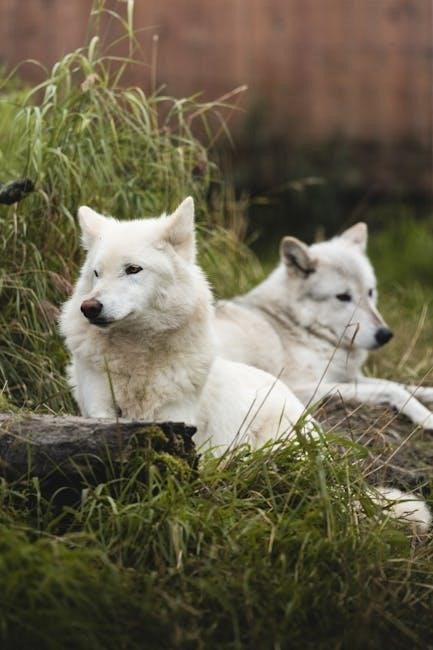
“My Mate Has Two Wolves” presents a multifaceted narrative, extending across a substantial 213 pages and occupying 8MB of digital space. The core of the work revolves around a deeply introspective wolf, grappling with past experiences and, specifically, the poignant loss of a mate. This internal reflection unfolds under the unwavering gaze of a young boy, who remains a silent observer throughout the unfolding drama.
Published in 2018 by K.V. Galaktionov, the piece has garnered some academic attention, receiving two citations as of the publication date. Beyond the central relationship, the work subtly introduces complex themes of genetic influence and phenotypic expression, hinted at in a related document from November 8, 2015. This document, spanning 120 pages and 8MB, suggests a non-linear interplay between these factors.
A brief exchange – “Youyou know hes my mate?” – captured on March 27, 2020, underscores the emotional weight and established connection within the story, hinting at a deeper, underlying narrative of companionship and sorrow. The work appears to be a rich tapestry of observation, introspection, and subtle thematic exploration.
The Core Narrative: A Boy and a Wolf
At the heart of “My Mate Has Two Wolves” lies the dynamic between a solitary boy and a contemplative wolf. The narrative centers on the wolf’s internal world, specifically its melancholic reflections on a lost mate, a sorrowful theme permeating the 213-page, 8MB work by Galaktionov (2018). The boy serves as a silent witness to this emotional landscape, his unwavering gaze prompting the wolf’s introspection.
This central pairing isn’t merely observational; it’s imbued with a quiet intensity, as evidenced by the dialogue snippet from March 27, 2020 – “Youyou know hes my mate?” – suggesting a pre-existing understanding and connection. The boy’s presence seems to unlock or at least acknowledge the wolf’s grief.
While the narrative’s broader context hints at genetic and phenotypic complexities (as noted in the November 8, 2015 document), the immediate focus remains firmly on this intimate, unspoken exchange between two beings – a boy and a wolf bound by a shared, yet undefined, space.
Key Characters and Their Relationships
The primary characters are a boy and a wolf, their relationship defined by silent observation and implied understanding. The wolf, burdened by the loss of its mate, is the focal point of introspection, as detailed in Galaktionov’s 213-page work (2018). The boy’s unwavering gaze acts as a catalyst for the wolf’s reflections, suggesting a connection beyond simple observation.
The “mate” of the wolf is a spectral presence, known only through the wolf’s sorrow and the poignant question posed on March 27, 2020: “Youyou know hes my mate?” This implies a shared awareness of the lost bond within a wider circle, perhaps hinting at a community or pack structure.
The boy’s role remains largely passive, yet profoundly impactful. He doesn’t actively engage, but his presence is crucial to unlocking the wolf’s internal narrative. The nature of their connection—whether empathetic, curious, or something else entirely—remains subtly ambiguous, adding depth to the core dynamic.
Genetic and Phenotypic Factors in the Story
A document from November 8, 2015, suggests a non-linear interplay between genetics, phenotypes, and environmental factors,
influencing complex systems within the narrative’s underlying structure.
These factors potentially affect permeability and transport systems,
hinting at biological mechanisms subtly woven into the story’s thematic exploration of loss and connection.
Non-Linear Relationships Explored

The narrative of “My Mate Has Two Wolves” appears to delve into relationships that defy simple, direct causation, as suggested by a document dated November 8, 2015 (120 pages, 8MB). This implies that the connections between characters, events, and even internal states aren’t easily traced along a straight line.
Instead, the story seems to propose a web of interconnected influences, where one factor doesn’t necessarily lead to a predictable outcome. This complexity is further underscored by the mention of genetic and phenotypic traits playing a role, hinting at biological underpinnings to these non-linear dynamics.
The story’s exploration of loss and connection, particularly the wolf’s reflection on his mate, could be interpreted as a manifestation of these intricate, non-linear relationships. The emotional weight and subtle nuances of the interactions suggest a depth that goes beyond superficial cause-and-effect.
This approach allows for a more nuanced and realistic portrayal of the characters’ experiences, acknowledging the unpredictable nature of life and the complexities of emotional bonds.
The Role of Two Genetic Factors
A key element within the “My Mate Has Two Wolves” narrative, as indicated in a November 8, 2015 document (120 pages, 8MB), involves the influence of two specific genetic factors. While the precise nature of these factors isn’t explicitly detailed, their presence suggests a biological basis for the characters’ behaviors and predispositions.
These genetic influences likely contribute to the complex, non-linear relationships explored within the story, shaping the characters’ responses to their environment and to each other. The mention of these factors implies that inherent traits, passed down through generations, play a significant role in determining their destinies.
It’s plausible that these genetic factors impact the permeability of complex transport systems, as alluded to in the document, potentially influencing physiological or psychological characteristics relevant to the story’s themes.
The inclusion of genetic considerations adds a layer of scientific depth, suggesting that the characters’ actions aren’t solely determined by free will but are also shaped by their inherited biological makeup.
Connection to a Second Phenotypic Trait
The 120-page, 8MB document from November 8, 2015, highlights a connection between the two identified genetic factors and a secondary phenotypic trait within the “My Mate Has Two Wolves” story. This suggests a complex interplay between genotype and observable characteristics, moving beyond simple genetic determinism.
The nature of this second phenotypic trait remains unspecified, but its existence implies that the genetic influences manifest in multiple ways, impacting not just core behaviors but also outward expressions of character. This adds nuance to the narrative, suggesting a holistic view of the characters’ identities.
The relationship is described as “non-linear,” indicating that the connection isn’t straightforward or predictable. Environmental factors and individual experiences likely modulate the expression of the trait, creating unique outcomes for each character.
This interplay between genetics, environment, and phenotype enriches the story’s thematic depth, suggesting that identity is a fluid and multifaceted construct shaped by a multitude of influences.
Archaeological and Historical Context
A 213-page, 8MB resource references a review of archaeological material, specifically citing the work of Suprenkov, Mikhailov, Stolyarenko, Toporivskaya, and Trebukhina (138 pages).
Early medieval influences are noted, suggesting a potential historical grounding for the narrative’s themes and setting, enriching the story’s depth.
Early Medieval Influences
The narrative’s potential connection to the Early Medieval period, as indicated by referenced archaeological studies, suggests a fascinating interplay between historical context and the story’s thematic elements. This era, spanning roughly the 5th to the 10th centuries, was a time of significant cultural and societal transformation in Europe, marked by the decline of the Roman Empire and the rise of new kingdoms and belief systems.
Considering the wolf’s symbolic weight in many early medieval cultures – often representing both wildness and spiritual power – it’s plausible that the story draws upon these deeply ingrained associations. The concept of a ‘mate,’ particularly within a hierarchical or tribal structure, also resonates with the social dynamics prevalent during this period. Further research into the folklore and mythology of the Early Medieval period could reveal parallels to the narrative’s core themes of loyalty, loss, and the complex relationship between humans and the natural world.
The archaeological material reviewed by Suprenkov et al. may offer insights into the lived experiences and belief systems of people during this time, potentially illuminating the cultural underpinnings of the story’s symbolic language.
Review of Archaeological Material
The referenced work by Suprenkov A.A., Mikhailov A.M., Stolyarenko P.G., Toporivskaya M.A., and Trebukhina N.Yu. represents a crucial component in understanding the potential historical grounding of “My Mate Has Two Wolves.” Archaeological evidence, when meticulously reviewed, can illuminate the cultural landscape from which the story’s symbolism and motifs may have emerged.
Specifically, the analysis of material culture – tools, settlements, burial sites, and artifacts – can provide insights into the relationship between humans and wolves in past societies. Were wolves viewed primarily as threats, or were they integrated into the spiritual or economic lives of communities? The archaeological record may reveal evidence of wolf-human interactions, such as depictions of wolves in art or the presence of wolf remains in settlements.
Furthermore, the study of settlement patterns and social structures can shed light on the concept of ‘mates’ and pair-bonding within early communities, potentially offering a historical context for the narrative’s exploration of these themes. This review is essential for a comprehensive understanding.
Suprenkov, Mikhailov, Stolyarenko, Toporivskaya, and Trebukhina’s Research
The collaborative research of Suprenkov, Mikhailov, Stolyarenko, Toporivskaya, and Trebukhina is directly cited as foundational material relating to the broader context of “My Mate Has Two Wolves.” Their work, as referenced within the available documentation, focuses significantly on Early Medieval influences, providing a crucial historical backdrop for interpreting the narrative’s themes.
While the specific details of their findings aren’t fully elaborated in the provided snippets, the citation suggests a connection between the story’s setting or symbolism and the cultural practices of the Early Medieval period. This could encompass beliefs surrounding animal spirits, societal structures related to companionship, or even the prevalence of specific folklore motifs.
Further investigation into their published work is necessary to fully understand the nature of this connection, but their research clearly positions the story within a defined historical and cultural framework, enriching its interpretive possibilities.
Scientific Perspectives within the Narrative
Modern parasitology, a rapidly developing science, actively employs diverse methods, as highlighted by V.T. Yungblud’s 298-page, 4MB work, offering a scientific lens.
Yungblud’s research, from 2021, underscores the field’s dynamic nature, potentially informing interpretations of animal behavior and interspecies relationships within the story.

Parasitology and Modern Science
The narrative’s potential connection to parasitology, as illuminated by V.T. Yungblud’s work (2021, 298 pages, 4MB), suggests a fascinating, albeit indirect, scientific avenue for exploration. Yungblud, a Doctor of Historical Sciences and Professor at Vyatka State University, champions modern parasitological studies.
This rapidly evolving field actively integrates a wide array of methodologies, potentially offering insights into the biological underpinnings of animal behavior and interspecies dynamics depicted in “My Mate Has Two Wolves.” While the story doesn’t explicitly detail parasitic relationships, the scientific context provided by Yungblud encourages consideration of how such factors might influence animal interactions.
The text highlights parasitology as a dynamic discipline, constantly refining its understanding of complex biological systems. This perspective allows for a nuanced interpretation of the narrative, moving beyond purely metaphorical readings to consider potential biological influences on the characters’ actions and relationships. The work of Yungblud provides a valuable framework for such an analysis.
The Development of Parasitological Studies
V.T. Yungblud’s 2021 publication (298 pages, 4MB) positions modern parasitology as a burgeoning science, actively employing diverse methodologies. This context, while not directly linked to the narrative of “My Mate Has Two Wolves,” offers a lens through which to consider the biological complexities potentially influencing animal behavior within the story.
The document emphasizes the ongoing evolution of parasitological research, moving beyond traditional approaches to embrace innovative techniques. This progression mirrors a broader trend in scientific inquiry, seeking increasingly nuanced understandings of intricate ecosystems and organismal interactions.
Yungblud’s work, as detailed in the provided information, underscores the importance of interdisciplinary collaboration in advancing parasitological knowledge. While the story itself doesn’t explicitly address parasitism, the scientific backdrop suggests a potential for exploring how parasitic relationships could subtly shape the dynamics between the boy and the wolves, adding layers of biological realism to the narrative.
Contributions of V.T. Yungblud
V.T. Yungblud, a Doctor of Historical Sciences and Professor at Vyatka State University (ORCID: 0000-0002-2706-3904), is identified as the chief editor of the 2021 parasitological publication (298 pages, 4MB). While the provided context doesn’t detail specific contributions beyond this editorial role, it establishes Yungblud as a key figure in contemporary Russian parasitological research.
His leadership suggests a commitment to advancing the field, potentially fostering innovative studies and promoting interdisciplinary approaches. Though “My Mate Has Two Wolves” isn’t directly a parasitological text, Yungblud’s expertise provides a relevant scientific framework for considering the biological underpinnings of animal behavior depicted within the narrative.
The publication’s emphasis on modern parasitology’s rapid development, under Yungblud’s guidance, implies a dynamic research environment. This context subtly encourages a scientifically informed reading of the story, prompting consideration of how parasitic influences might contribute to the wolves’ actions and emotional states.

Social and Cultural Themes
Eva Koktysh and Ekaterina Semenova’s work explores martial arts, gender perception, and girls in sports,
revealing societal influences potentially mirrored in the story’s dynamics (98 pages, 1MB).
Their insights suggest a broader cultural context,
where perceptions of strength and vulnerability shape interactions, possibly influencing character relationships.
Martial Arts and Gender Perception
The exploration by Eva Koktysh and Ekaterina Semenova delves into the fascinating intersection of martial arts and societal perceptions of gender, a theme potentially resonant within the narrative of “My Mate Has Two Wolves.” Their work, documented in a 98-page publication (1MB), investigates how girls are perceived within the traditionally masculine domain of martial arts.
This analysis extends beyond simple participation, examining the underlying assumptions and biases that shape expectations and opportunities for female athletes. The researchers likely considered how societal norms influence the portrayal of strength, discipline, and aggression – qualities often associated with both martial arts and the animalistic imagery present in the story.
Understanding these perceptions is crucial, as they can inform character dynamics and thematic concerns within the narrative; Does the story challenge or reinforce traditional gender roles? Are female characters empowered through physical prowess, or are they subject to limitations based on societal expectations? The insights from Koktysh and Semenova provide a valuable lens through which to analyze these questions.
Eva Koktysh and Ekaterina Semenova’s Insights
Koktysh and Semenova’s research, detailed in a 98-page document (1MB), centers on a conversation with Ana regarding her passion for martial arts. This focus provides a framework for understanding how individuals navigate and challenge pre-conceived notions surrounding gender roles within physically demanding disciplines.
Their work implicitly questions why individuals should even consider trying martial arts, suggesting an exploration of personal empowerment and breaking down societal barriers. This line of inquiry could be mirrored in “My Mate Has Two Wolves,” perhaps through characters confronting internal or external limitations.
The researchers’ approach likely involved qualitative data gathering, such as interviews, to capture nuanced perspectives on gender dynamics. Applying this methodology to the story could reveal how characters grapple with identity, belonging, and the expectations placed upon them. The insights offer a valuable perspective on the complexities of self-discovery and challenging norms.
Perceptions of Girls in Sports
Eva Koktysh and Ekaterina Semenova’s work directly addresses perceptions of girls participating in sports, a theme potentially resonant within the narrative of “My Mate Has Two Wolves” if examined through a lens of societal expectations and challenging norms.
Their research, as outlined in the 98-page document, explores the underlying biases and assumptions that often shape how girls are viewed in traditionally male-dominated arenas. This could translate to the story by examining characters who defy expectations or face prejudice based on gender.
The study likely investigates the psychological impact of these perceptions, including issues of self-confidence, body image, and the pressure to conform. Considering this within the context of the story might reveal how characters navigate internal conflicts and external pressures related to identity and belonging. The research offers a framework for analyzing power dynamics and challenging stereotypes.
Artistic and Theoretical Considerations
The Stroganov Russian State University collection, spanning late 2011 to early 2013, examines theoretical problems in art history and the synthesis of plastic arts.
This bulletin, a monitoring period report, provides insights into artistic development, potentially informing interpretations of “My Mate Has Two Wolves”’ aesthetic elements.
Theoretical Problems in Art History
The collection from the Stroganov Russian State University, as detailed in their published bulletin, directly addresses core theoretical problems within art history. These investigations delve into methodologies for analyzing artistic expression, questioning established norms and exploring new interpretive frameworks. The bulletin’s focus on the synthesis of plastic arts suggests an interest in interdisciplinary approaches, potentially examining how different artistic mediums interact and influence one another.
Considering “My Mate Has Two Wolves,” a theoretical lens could explore the narrative’s visual potential – how might the story be represented visually, and what artistic choices would best convey its emotional depth and thematic complexity? Furthermore, the bulletin’s timeframe (late 2011 – early 2013) positions these theoretical considerations within a specific art historical context, prompting questions about contemporary artistic trends and their potential influence on the work’s creation or interpretation.
The bulletin’s emphasis on monitoring artistic developments implies a critical engagement with evolving aesthetic sensibilities, offering a valuable framework for understanding the story’s place within a broader artistic landscape.
Synthesis of Plastic Arts
The Stroganov University bulletin explicitly highlights the “synthesis of plastic arts” as a key area of investigation, suggesting a deliberate exploration of how different visual mediums – sculpture, painting, graphic arts, and potentially even digital art – can be integrated to create a unified artistic expression. This approach moves beyond traditional disciplinary boundaries, seeking to uncover synergistic relationships between various artistic techniques and forms.
Applying this concept to “My Mate Has Two Wolves,” one might consider how the story’s themes of duality and inner conflict could be represented through a mixed-media installation. Perhaps a sculptural representation of the wolf, combined with painted imagery evoking the boy’s emotional state, could create a powerful and multi-layered artistic statement. The narrative’s inherent visual potential lends itself well to such a synthesis.
The bulletin’s focus on this synthesis implies a desire to move beyond purely representational art, towards a more conceptual and emotionally resonant form of expression.
Monitoring Period: Late 2011 ⎯ Early 2013
The bulletin from the Stroganov Russian State University for Arts and Industry details information gathered during the late 2011 to early 2013 timeframe, a period specifically designated for “Monitoring.” This suggests a systematic observation and documentation of trends, developments, and emerging themes within the realm of art and culture. The bulletin’s structure begins with a section dedicated to this monitoring phase, indicating its foundational importance.
While a direct link to “My Mate Has Two Wolves” during this precise period isn’t explicitly stated in the provided text, the monitoring focus implies a broader contextual awareness. Researchers were actively tracking artistic currents, potentially including narratives exploring themes of human-animal connection, psychological introspection, or folkloric elements – all of which resonate with the story’s core concepts.
This monitoring likely involved analyzing artistic output, critical discourse, and emerging theoretical frameworks, providing a backdrop against which works like “My Mate Has Two Wolves” could be understood and interpreted.